


For decades, the story of American manufacturing was one of decline. Factories closed, jobs moved overseas, and entire regions hollowed out. Today, that narrative is changing. Manufacturing investment is returning to the United States, driven by supply chain disruptions, geopolitical risk, and new industrial policy. But this revival does not resemble the past. The factories returning are leaner, more automated, and far more dependent on high-skilled labor than the assembly lines many Americans remember.
Reshoring Is About Control, Not Nostalgia
The push to bring manufacturing back to the U.S. is not driven by sentiment; it is driven by risk. Global supply chain disruptions exposed the fragility of just-in-time production and heavy reliance on overseas suppliers. Companies and policymakers now prioritize reliability over the lowest possible cost. Reshoring critical production semiconductors, energy components, medical supplies, and advanced manufacturing reduces exposure to geopolitical conflict, trade restrictions, and transportation chokepoints. The goal is not to recreate the past, but to regain control over strategic capacity.
Automation Is Central to the Comeback
Manufacturing is returning because automation makes it economically viable. Advanced robotics, AI-driven quality control, and highly automated production systems allow U.S. factories to operate with fewer workers while maintaining global competitiveness. Automation compensates for higher domestic labor costs and increases consistency, speed, and precision. The result is higher output with smaller teams. This is why manufacturing investment can surge even as total factory employment grows more slowly than in past eras.
Factory Jobs Now Require Higher Skills
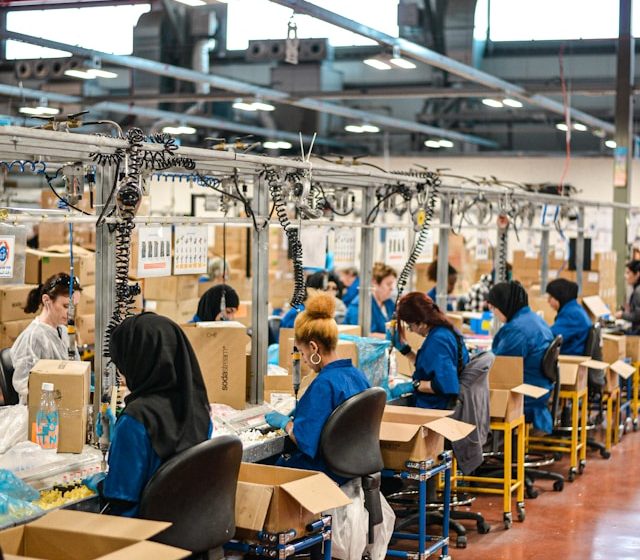
The nature of manufacturing work has changed fundamentally. Today’s factories need technicians, engineers, data analysts, maintenance specialists, and operators who can manage complex automated systems. Manual repetition has given way to monitoring, troubleshooting, and optimization. These roles demand technical training, problem-solving ability, and continuous learning. Manufacturing jobs are becoming fewer in number but higher in pay and complexity, creating opportunity for some workers while excluding others without access to training. [Image illustrating a factory floor with workers monitoring control panels alongside automated machinery]
The Labor Shortage Is a Skills Mismatch
Manufacturers often report difficulty hiring, not because people don’t want to work, but because the skills required have shifted faster than the pace of workforce development. Many regions lack enough workers trained in robotics, controls, advanced machining, and industrial software. Apprenticeships, vocational education, and community colleges are critical, yet underutilized or underfunded. The manufacturing comeback depends less on bringing back old jobs and more on building new talent pathways that align with modern production.
Industrial Policy Is Reshaping the Landscape
Federal and state policy now plays a much larger role in manufacturing decisions. Incentives for domestic production, infrastructure investment, and supply chain security are steering capital toward U.S. factories. Unlike earlier eras, policy is targeting specific sectors tied to national security and economic resilience. This public-private alignment accelerates investment, but it also means manufacturing growth is strategic, selective, and shaped by long-term planning rather than market forces alone.
Communities Will Experience the Comeback Unevenly
The return of manufacturing will not revive every former factory town. New plants often locate where logistics, energy access, and skilled labor already exist. Some regions will benefit from high-wage industrial clusters, while others remain disconnected. This uneven geography risks widening regional inequality unless workforce development and infrastructure investment are deliberately expanded. Manufacturing is coming back, but not everywhere, and not automatically.
Why This Manufacturing Era Is More Fragile
While the new manufacturing model is more resilient to global shocks, it carries its own risks. Heavy automation reduces flexibility in labor deployment. Skill shortages can bottleneck production. Rapid technological change can make facilities obsolete faster. This means the manufacturing comeback requires continuous investment not just in machines, but in people and systems that can adapt as technology evolves.
What This Means for American Workers
For workers, the manufacturing revival offers opportunity, but not without transition. The path into manufacturing increasingly runs through technical education rather than physical endurance. Wages can be strong, but expectations are higher. Workers who gain the right skills can access stable, well-paying careers. Those left out face displacement rather than revival. The success of this comeback depends on whether training and access keep pace with investment.