

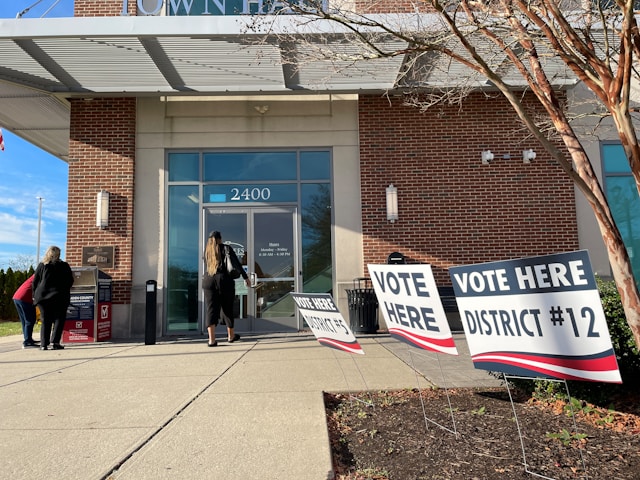

National politics dominate cable news and social media feeds, but many of the most consequential policy decisions in the United States are being shaped far from Washington. Quietly, and often with little public attention, local elections are reshaping national policy from the ground up: school boards, county sheriffs, city councils, and state legislatures are shaping national policy from the ground up.
These races rarely draw large crowds or sustained media coverage. Turnout is often low. Yet the authority wielded by local officials increasingly determines how national debates are translated into lived reality.
The Power Hiding in Plain Sight
Local governments are not merely administrative extensions of federal authority. In many areas, they are the primary enforcers, interpreters, and sometimes resisters of national policy. Decisions made at the local level shape education standards, law enforcement practices, public health enforcement, and even access to the ballot.
As polarization intensifies at the federal level, political movements have shifted focus downward. When Congress stalls, or courts intervene, local offices become the fastest path to real-world impact.
School Boards as Cultural Battlegrounds
Once considered apolitical, school boards have become central arenas for national culture wars. These bodies control curriculum standards, book approvals, disciplinary policies, and the implementation or non-implementation of federal education guidelines.
Debates over history instruction, gender identity, and parental rights often begin at school board meetings before escalating into state legislation or national talking points. What starts as a local curriculum dispute can ripple outward, influencing statewide education policy and even shaping national party platforms.
Because school board elections tend to have extremely low turnout, organized groups can exert outsized influence with relatively small numbers.
Sheriffs and the Limits of Federal Authority
County sheriffs occupy a uniquely powerful position in the American system. Unlike police chiefs, many sheriffs are elected officials who answer directly to voters rather than to city managers or mayors.
This autonomy allows sheriffs to shape how laws are enforced or whether they are enforced at all. Across the country, sheriffs have declared they will not enforce specific gun regulations, immigration policies, or public health mandates. These decisions can effectively neutralize state or federal law within county lines.
In practice, this means national policy can succeed or fail based on the outcome of a local sheriff’s race.
State Legislatures as National Policy Incubators
State legislatures have become laboratories for national policy, often moving faster and more decisively than Congress. Laws governing abortion access, voting procedures, labor rights, environmental regulation, and healthcare frequently originate at the state level.
Once enacted, these policies are tested in court, adopted by other states, and eventually elevated to national debate. The result is a patchwork system where Americans experience radically different rights and services depending on where they live.
State legislative elections, however, remain among the least visible and least understood contests in the country.
Why These Elections Fly Under the Radar
Local races suffer from a visibility problem. They lack the drama of presidential campaigns and the fundraising firepower of Senate races. Media coverage is limited, voter information is sparse, and election dates are often confusing or irregular.
This low attention environment benefits highly motivated interest groups, which can mobilize supporters more easily than the general public. Over time, this dynamic reshapes policy outcomes without broad democratic engagement.
The National Consequences of Local Choices
The cumulative effect of local elections is national transformation. Education policy becomes fragmented. Law enforcement varies dramatically by county. Voting access expands in some states and contracts in others. Federal authority becomes uneven, filtered through local power structures.
In this way, local elections do not merely reflect national politics; they increasingly define them.
Why It Matters More Than Ever
As federal institutions struggle with gridlock and declining public trust, local governments are filling the vacuum. This shift places enormous responsibility on offices that many voters overlook or skip entirely on the ballot.
Democracy does not erode only through dramatic national crises. It can also be reshaped quietly, one school board seat, one sheriff’s badge, one state legislative district at a time.
Understanding this reality is the first step toward engaging with it. Because in today’s America, the most critical elections may be the ones happening closest to home.