


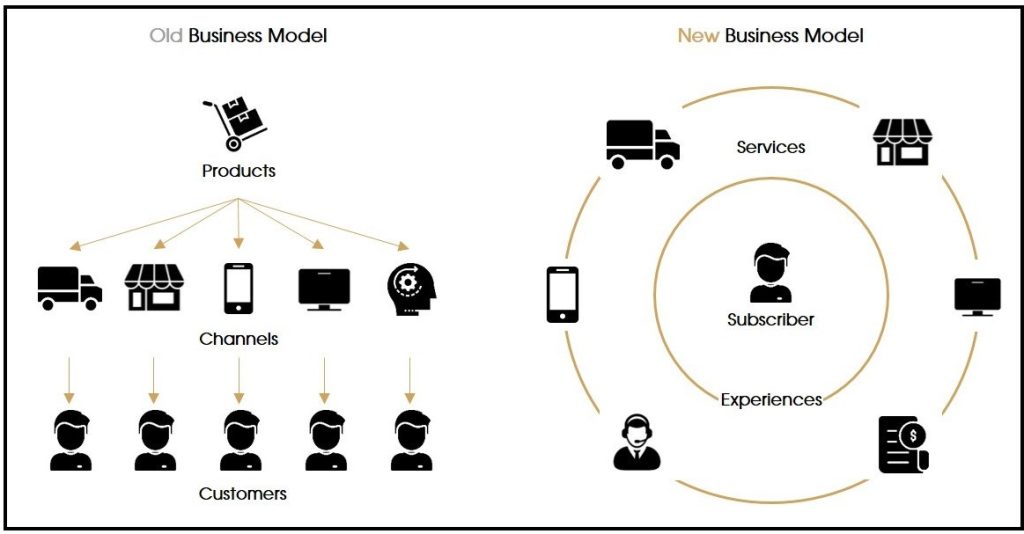
High interest rates change the rules of business. When the cost of capital rises, growth-at-all-costs strategies quickly lose their appeal. Cheap money disappears, investors become selective, and customers grow more cautious with spending. In this environment, the companies that win are not necessarily the fastest-growing but the most disciplined, resilient, and cash-efficient.
Across industries, three business models are consistently outperforming in a high-interest-rate economy: subscriptions, services, and lean operations. These models prioritize predictable revenue, strong cash flow, and operational efficiency exactly what markets reward when borrowing becomes expensive.
This article breaks down why these models work, how companies are using them effectively, and what leaders should focus on to stay competitive as interest rates remain elevated.
Why High Interest Rates Reshape Business Strategy
High interest rates have a ripple effect across the entire economy:
- Debt becomes expensive, reducing leverage-driven expansion
- Venture capital and private equity slow down, favoring profitability over scale
- Consumers cut discretionary spending, raising the bar for value
- Cash flow matters more than valuations, especially for small and mid-sized businesses
In low-rate environments, companies could survive years of losses funded by cheap capital. In high-rate environments, that model breaks. Businesses must generate reliable revenue, positive margins, and operational discipline.
This is where subscriptions, services, and lean operations excel.
Subscription Models: Predictability Wins When Capital Is Costly
Subscription-based businesses thrive during periods of economic uncertainty because they replace one-time transactions with recurring, predictable revenue.
Why Subscriptions Perform Well in High-Rate Environments
Subscriptions offer several advantages that investors and operators value when money is tight:
- Forecastable cash flow improves planning and reduces risk
- Lower customer acquisition pressure once users are retained
- Stronger customer relationships through ongoing engagement
- Higher lifetime value (LTV) compared to one-off sales
When interest rates are high, predictability reduces the need for external financing. Businesses can fund growth internally rather than relying on expensive debt.
Industries Where Subscriptions Are Winning
- SaaS and cloud platforms (B2B and B2C)
- Media and content (newsletters, streaming, education)
- E-commerce memberships (auto-ship, loyalty programs)
- Professional tools and analytics
The most successful subscription businesses focus on retention, pricing discipline, and value clarity rather than aggressive discounting.
Services Businesses: Cash Flow Over Capital Intensity
Service-based companies are another clear winner in a high-interest-rate economy. Unlike capital-heavy businesses, services rely primarily on human expertise rather than borrowed money.
Why Services Are Resilient When Rates Are High
Service models perform well because they:
- Require little upfront capital investment
- Generate immediate revenue once work is delivered
- Can scale linearly or selectively, avoiding overextension
- Adjust pricing faster than product-based companies
When financing costs rise, businesses that can operate without heavy debt have a structural advantage.
High-Demand Service Segments
Certain service categories are particularly strong in tight economic conditions:
- Professional services (consulting, accounting, legal, compliance)
- Technology services (cloud migration, data analytics, cybersecurity)
- Operational support (outsourcing, automation, optimization)
- B2B advisory and implementation services
As companies delay large capital expenditures, they often shift budgets toward services that improve efficiency or reduce risk, creating sustained demand.
Lean Operations: Efficiency Becomes a Competitive Advantage
Lean operations are not just a cost-cutting exercise they are a strategic response to expensive capital.
What Lean Operations Really Mean
Lean operations focus on maximizing output with minimal waste, including:
- Fewer management layers
- Tighter control over fixed costs
- Automation of repetitive tasks
- Faster decision-making cycles
- Clear accountability and metrics
In a high-interest-rate environment, bloated cost structures quickly erode margins. Lean organizations adapt faster and survive longer.
Why Lean Companies Outperform
Companies running lean operations benefit from:
- Lower break-even points, reducing financial risk
- Greater pricing flexibility, even as customers become price-sensitive
- Improved cash conversion cycles, freeing internal capital
- Faster pivots, without requiring new funding
Instead of scaling headcount aggressively, winning companies invest in tools, process optimization, and cross-functional talent.
How These Models Reinforce Each Other
The strongest businesses combine all three models rather than choosing just one.
For example:
- A subscription business with lean operations improves margins and retention
- A services firm using subscription-style retainers stabilizes revenue
- A lean service company reinvests profits without relying on debt
This hybrid approach creates a self-sustaining system where growth is funded by operations, not borrowing.
What Investors and Markets Are Rewarding Now
In today’s environment, markets are rewarding businesses that demonstrate:
- Consistent cash flow
- Clear unit economics
- Low capital intensity
- Disciplined growth
- Operational transparency
Valuations are increasingly tied to profitability and resilience, not just top-line growth. Companies that align with these expectations gain access to better terms, stronger partnerships, and long-term stability.
If you’re operating or in a high-interest-rate economy, focus on the fundamentals:
- Prioritize recurring revenue where possible
- Build services around clear, measurable outcomes
- Audit operations relentlessly for waste and inefficiency
- Reduce dependence on debt-funded growth
- Optimize for cash flow, not vanity metrics
High interest rates reward discipline. Businesses that embrace subscriptions, services, and lean operations are not just surviving, they are setting themselves up to dominate when economic conditions eventually shift again.
Final Thoughts
Economic cycles change, but strong business models endure. In a high-interest-rate economy, the winners are clear: predictable revenue, low capital intensity, and operational excellence.
Subscriptions provide stability. Services deliver cash flow. Lean operations protect margins.
Together, they form the foundation of the most resilient and successful businesses today—and tomorrow.